When selecting outdoor furniture fabric, two names frequently dominate the conversation: olefin and acrylic. Both materials promise durability, color retention, and weather resistance, but they differ significantly in performance, cost, and ideal use cases. For Spuncrylic, a leading innovator in textile solutions, understanding these differences is essential to helping customers make informed decisions. This article provides a comprehensive comparison of olefin and acrylic outdoor fabrics, examining their strengths, weaknesses, and which environments each suits best.
What is Olefin Fabric?
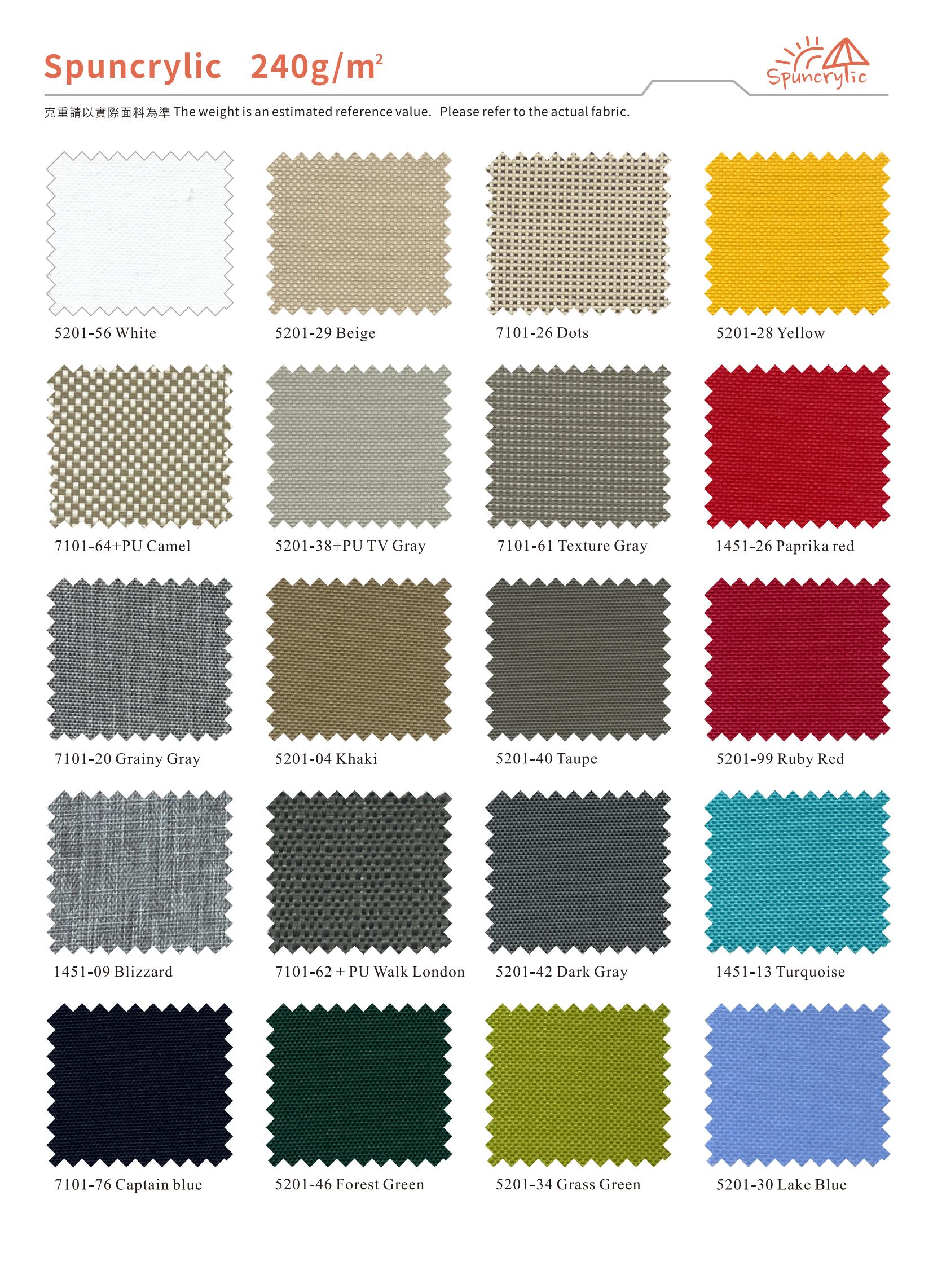
Formosol Acrylic Fabric Color Card
Olefin, also known as polypropylene, is a synthetic fiber derived from propylene gas. It is inherently hydrophobic, meaning it repels water rather than absorbing it. This property makes olefin naturally resistant to mold, mildew, and staining. Spuncrylic's olefin fabrics are solution-dyed, integrating color pigments directly into the fiber during manufacturing. The result is exceptional UV resistance—our fabrics maintain vibrant colors for 1500–2000 hours under accelerated weathering tests.
Key advantages of olefin fabric include:
• Superior water and stain resistance due to non-absorbent fibers
• Excellent colorfastness with solution-dyed technology
• Lightweight and easy to handle
• Highly resistant to chemicals and abrasions
• More affordable than acrylic alternatives
What is Acrylic Fabric?
Acrylic is a synthetic fiber made from polymers of acrylonitrile. It is often praised for its soft, wool-like feel and is commonly used in high-end outdoor applications. Acrylic fabrics are also solution-dyed, providing good color retention and UV resistance. However, acrylic fibers are more absorbent than olefin, making them slightly more prone to moisture-related issues such as mildew growth if not properly maintained.
Key advantages of acrylic fabric include:
• Soft, luxurious hand feel similar to natural wool
• Good UV resistance and color retention
• Wide range of textures and weaves available
• Established reputation in premium outdoor markets
Performance Comparison
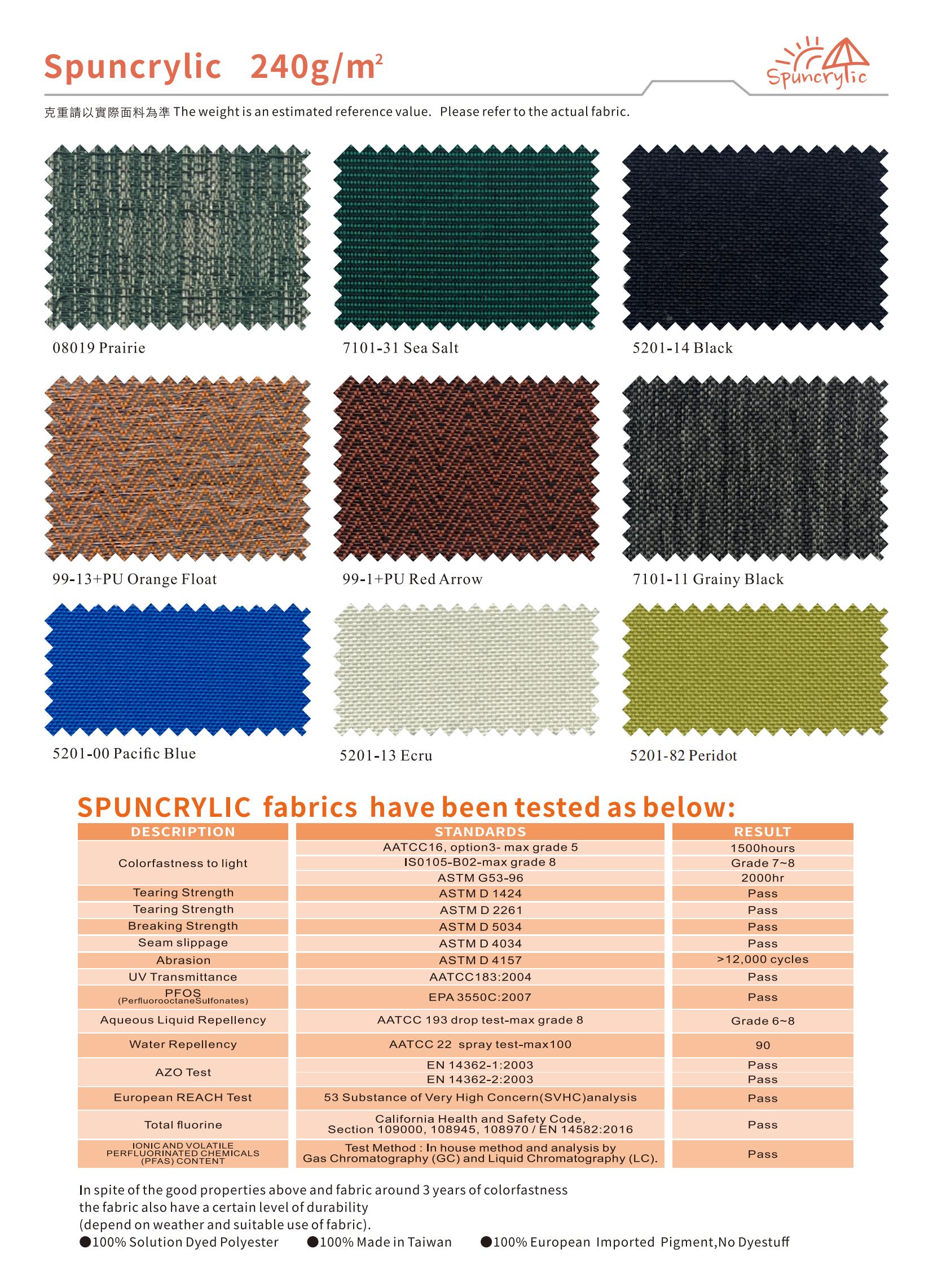
Spuncrylic Fabric Test Data & Specifications
When comparing olefin and acrylic side by side, several critical factors emerge:
Water Resistance: Olefin wins decisively. Its hydrophobic nature means water beads on the surface, while acrylic absorbs moisture more readily. For humid climates or poolside furniture, olefin is the clear choice.
UV Resistance: Both materials perform well when solution-dyed. Spuncrylic's olefin achieves 1500–2000 hours of colorfastness, comparable to premium acrylic options.
Durability: Olefin exhibits superior abrasion resistance (>12,000 cycles in Martindale tests) and tensile strength. Acrylic, while durable, is slightly more susceptible to pilling over time.
Comfort: Acrylic offers a softer, more plush feel. Olefin has improved significantly in recent years but may feel slightly stiffer to some users.
Cost: Olefin is generally 20–40% more affordable than acrylic, making it attractive for commercial projects and budget-conscious consumers.
Which Should You Choose?
Choose Olefin if: You need maximum water resistance, prioritize durability and easy maintenance, or are working within a budget. Olefin is ideal for poolside furniture, marine applications, and high-traffic commercial spaces.
Choose Acrylic if: You prioritize a luxurious soft feel and are willing to invest in premium upholstery for residential settings where moisture exposure is minimal.
Conclusion
Both olefin and acrylic have their place in outdoor furniture. For Spuncrylic, our olefin-based solutions offer an unbeatable combination of performance, durability, and value. With 20 vibrant colors, 240g/m² construction, and industry-leading weather resistance, Spuncrylic fabrics are engineered to exceed expectations in the most demanding outdoor environments.